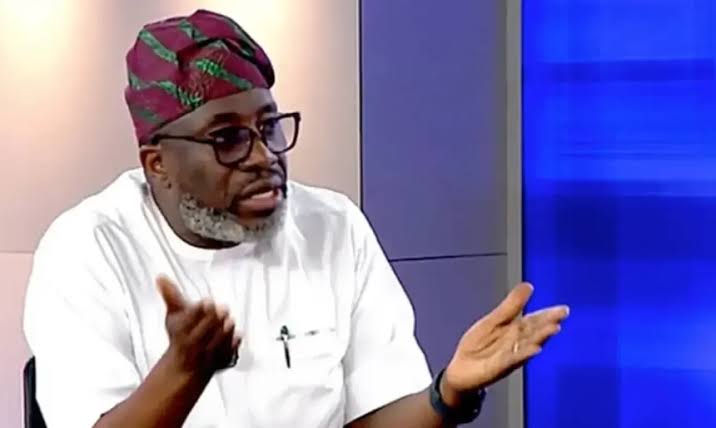
The Director-General of the Nigeria Democratic Congress (NDC) Presidential Campaign Council, Ibrahim Abdulkarim, has criticised some leaders of the African Democratic Congress (ADC), describing them as lazy and entitled politicians over their approach to building an opposition coalition ahead of the 2027 general elections.
Abdulkarim made the remarks on Wednesday while appearing on Prime Time, an Arise Television programme, where he faulted the ADC leadership for allegedly failing to establish clear agreements on power-sharing, leadership and the structure of the proposed coalition before seeking the support of other political figures.
According to him, the ADC began reaching out to politicians to join its coalition without first resolving fundamental questions about who would lead the alliance and how political interests would be accommodated.
“I used to term some of the people I see in ADC as lazy politicians,” Abdulkarim said.
To support his criticism, he cited the formation of the All Progressives Congress (APC) in 2013, arguing that its promoters first negotiated and documented their agreements before opening the door to other political stakeholders.
He maintained that the APC established its leadership arrangement, presidential ambition and zoning understanding before inviting other parties and politicians into the merger process.
Abdulkarim argued that the ADC failed to adopt a similar approach, despite presenting itself as a platform for opposition unity.
“Right from time, even when they are constructing this coalition that they talk about, instead of them finding a way of doing what the APC had done, put everything in black and white,” he added.
He also questioned what he described as the premature decision by some ADC figures to position former Anambra State Governor Peter Obi as a potential running mate to former Vice President Atiku Abubakar.
According to him, such declarations undermined the credibility of the coalition process, particularly when no transparent agreement had been reached among the political actors involved.
“What kind of coalition is that?” he asked.
The NDC campaign council director further condemned what he described as the sense of entitlement among some political elites, especially their perceived assumption that certain regions should determine the country’s political leadership.
“The entitlement from the elite, I find it very annoying sometimes. You just decide the North. Which is North?” he said.
He argued that political leaders should not assume that the northern region has an automatic right to determine who occupies the presidency, noting that the region has had considerable influence over the country’s leadership.
Abdulkarim specifically referenced the period spanning the administrations of former military Head of State Ibrahim Babangida and the late President Muhammadu Buhari, questioning why the same political interests should continue to dominate discussions about presidential succession.
Despite his reservations about the ADC-led initiative, Abdulkarim clarified that the NDC was not opposed to opposition parties working together to challenge the ruling party in 2027.
However, he insisted that any coalition must be founded on clear principles, mutual understanding and agreed political arrangements rather than assumptions about entitlement or predetermined leadership positions.
He also argued that opposition parties were not compelled to organise their alliance under the ADC, suggesting that the NDC could equally serve as a platform for such an arrangement.
As an alternative, he floated the possibility of a joint presidential ticket involving Peter Obi and former Kano State Governor Rabiu Musa Kwankwaso, presenting the NDC as another potential vehicle for opposition collaboration ahead of the 2027 elections.