Nigeria and China have renewed calls for stronger cultural and creative partnerships, with both countries identifying photography, broadcasting, joint exhibitions, training programmes and digital media collaborations as key avenues for deepening bilateral relations.
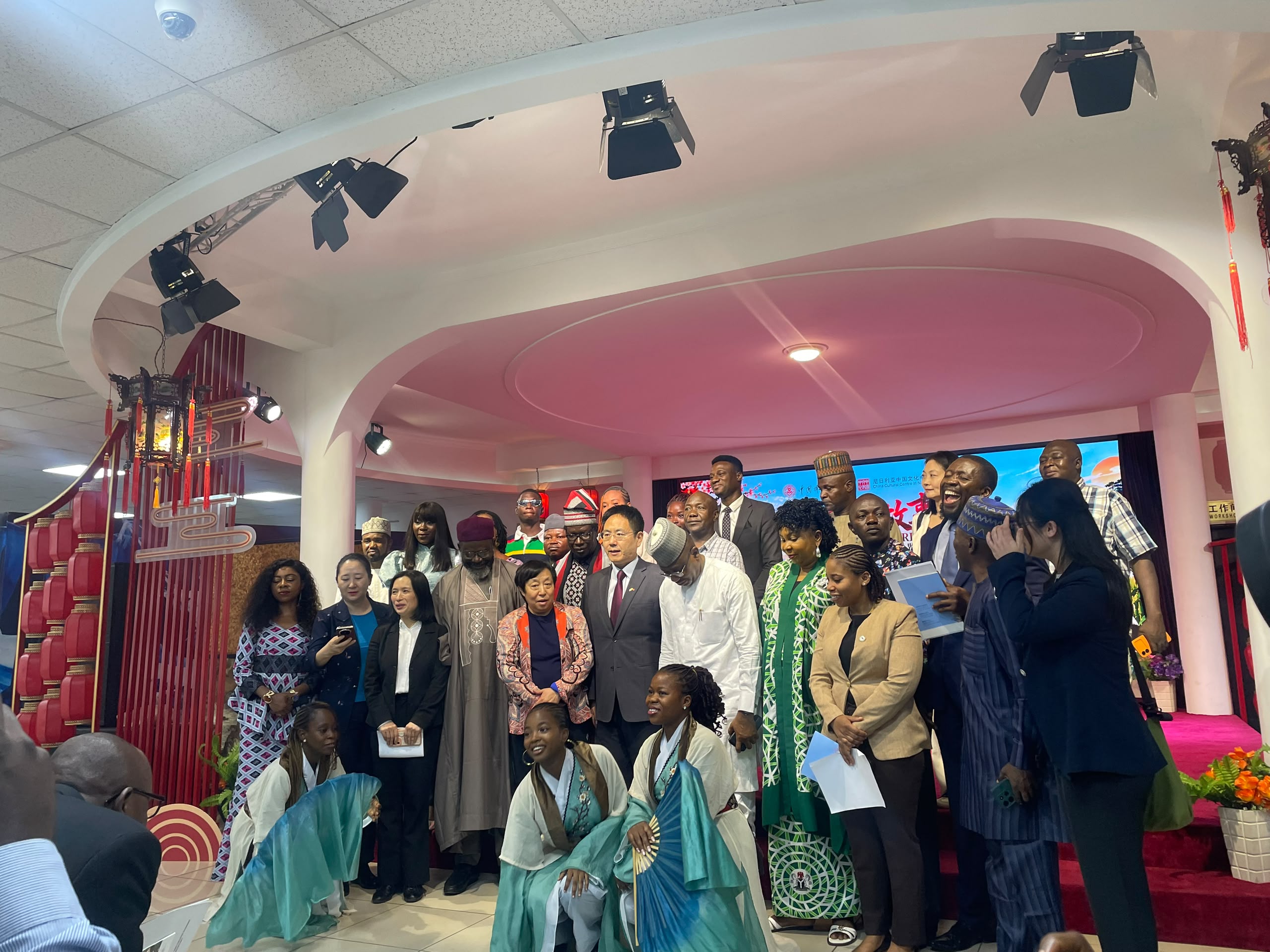
The call was made on Wednesday, November 18, 2026, at the opening of the China Stories: Photography Art Exhibition, organised by the China Cultural Centre in Nigeria in collaboration with the China Photographers Association in Abuja.
The event, which brought together representatives of cultural institutions, photographers, artists and government agencies from both countries, coincided with the 55th anniversary of Nigeria-China diplomatic relations and the 2026 China-Africa Year of People-to-People Exchanges.
Speaking on behalf of the Minister and the Federal Ministry of Arts, Culture, Tourism and Creative Economy, the ministry’s Permanent Secretary pledged support for initiatives that would encourage sustained artistic partnerships between Nigerian and Chinese creative professionals.
He described the engagement as an opportunity to strengthen mutual understanding and promote the longstanding friendship between the two countries, stressing that photography plays an important role in preserving history, documenting cultural heritage and communicating national identity.
“Photography is more than pictures. Photography is memory. It is history. It is how a nation tells its story to the world without speaking a word,” he said.
He noted that collaborative photography projects would enable citizens of both countries to appreciate each other’s cultures and experiences, adding that such exchanges could create lasting connections beyond diplomatic engagements.
“When a Chinese photographer takes a picture in Kano, in Lagos, in Calabar, or in Abuja – and when a Nigerian photographer takes a picture in Beijing, in Shanghai, or in Xi’an – we are not just taking photographs. We are building bridges between our peoples,” he stated.
The Permanent Secretary also highlighted patience, discipline and dedication as essential qualities of successful photography, using the story of an experienced photographer waiting for the right moment to capture a lion at sunrise.
Quoting the photographer, he said: “If you cannot wait, you cannot photograph. The lion does not come because you are in a hurry. The light does not wait for you. You must wait for the light.”
He explained that understanding a community’s culture requires time, genuine interaction and a willingness to appreciate its traditions and way of life.
“A photographer must be patient with nature. Patient with people. Patient with light. Patient with culture. Because culture does not reveal itself in a hurry. You must sit with a community, eat with them, listen to them, and only then will they show you their true smile,” he said.
He assured the Chinese delegation that the ministry would support efforts to establish an enabling environment for joint creative productions, exhibitions and other cultural exchange programmes.
“Let this visit open a new chapter – where Nigerian and Chinese photographers will work together, exhibit together, and tell the story of our friendship to the world,” he added.
Ebuebu described broadcasting as an important instrument of cultural diplomacy, noting that satellite television, streaming services and social media had made it easier for countries to share their stories and cultural experiences with international audiences.
“Today, a cultural performance in Beijing can be watched in Abuja almost instantaneously. A Nigerian musical production can reach audiences in Shanghai, just as a Chinese documentary can find audiences across Africa,” he stated.
He, however, cautioned that increased access to digital platforms must be accompanied by authentic and balanced storytelling to prevent cultural exchanges from becoming one-sided or weakening indigenous identities.
“Broadcasting is therefore much more than the transmission of information and entertainment. It is an instrument of cultural diplomacy, an avenue for preserving heritage and a platform for promoting mutual understanding among nations,” Ebuebu said.
The NBC chief identified joint documentary productions, photography projects, cultural programming, exchange visits and creative industry partnerships as areas where both countries could expand cooperation.
He stressed that such initiatives would promote cultural tourism, facilitate knowledge transfer, create economic opportunities and give Nigerian and Chinese creative works greater international exposure.
“Every photograph tells a story, every story carries a culture and every culture contributes to the richness of our shared human experience,” he added.
In her remarks, a representative of the Chinese Embassy in Nigeria described photography as a powerful means of connecting people across geographical, cultural and linguistic boundaries.
“Photography is an art form that transcends language and national boundaries. Through its unique visual language, it captures the spirit of an era, conveys human emotions and connects hearts and minds. It serves as an important bridge for promoting mutual understanding and friendship among people from different countries,” she said.
She explained that the exhibition was designed to promote the outcomes of the 2024 Beijing Summit of the Forum on China-Africa Cooperation and advance the Global Civilization Initiative.
The diplomat also used the occasion to highlight China’s economic transformation, disclosing that its economy recorded an average annual growth rate of 8.9 per cent between 1979 and 2023, compared with the global average of 3.0 per cent.
She said China’s share of the global economy increased from approximately 1.7 per cent in 1978 to 16.5 per cent in 2025, while its Gross Domestic Product reached about $17.8 trillion.
On poverty reduction, she stated: “According to World Bank data, China’s development over nearly four decades has lifted close to 800 million people out of extreme poverty.”
She attributed the country’s development achievements to sustained economic reforms and investments in education, healthcare, social security and environmental protection.
Describing the exhibition as an opportunity for Nigerians to gain a better understanding of contemporary China, she said: “This photography exhibition offers our Nigerian friends a vivid window through which to discover and understand contemporary China.
“I hope that, through these outstanding photographic works, you will gain a deeper appreciation of China’s development and the richness of Chinese culture, while further promoting mutual learning between our civilizations and closer bonds between our peoples.”
On bilateral relations, she said the 55-year diplomatic relationship had been characterised by political support, economic cooperation and cultural exchanges between the two countries.
“Over the past 55 years, our two peoples have supported each other politically, pursued mutual benefit and win-win cooperation economically, and learned from and enriched each other culturally,” she said.
She also highlighted China’s decision to introduce zero-tariff treatment for 53 African countries with which it maintains diplomatic relations, including Nigeria, in May 2026, describing the initiative as part of efforts to strengthen economic cooperation with the continent.
“I sincerely hope that friends from all sectors of society in China and Nigeria will work hand in hand to advance our respective modernisation processes and actively contribute to building an all-weather China-Africa community with a shared future,” she said.
The exhibition featured 40 photographic works showcasing China’s landscapes, cultural heritage, social development and traditions, providing visitors with an opportunity to explore different aspects of the country’s history and contemporary society.
Participants included representatives of the Federal Ministry of Arts, Culture, Tourism and Creative Economy, the National Broadcasting Commission, the Society of Nigerian Artists and the Photographic Society of Nigeria, alongside members of the Chinese delegation.
The embassy representative expressed appreciation to the China Photographers Association and Nigerian stakeholders for supporting the initiative, expressing optimism that the exhibition would inspire further artistic cooperation and strengthen people-to-people relations.
“May the friendship between China and Nigeria continue to grow from strength to strength, and may the peoples of our two countries enjoy happiness, peace and prosperity!” she concluded.