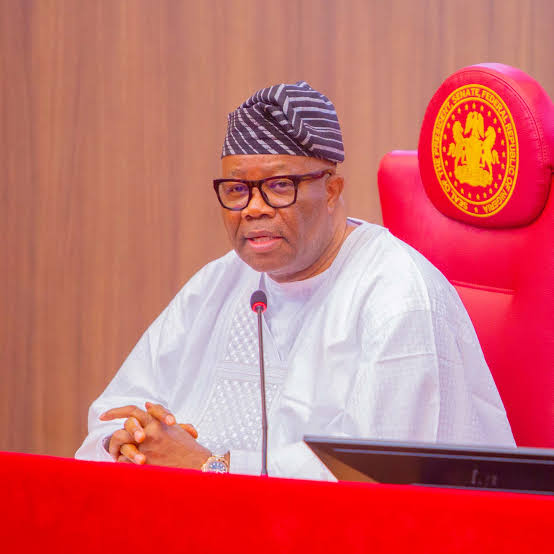

The National Chairman of the All Progressives Congress (APC), Professor Nentawe Goshwe Yilwatda, has applauded the 36 state governors and State Houses of Assembly for backing the proposed constitutional amendment to establish State Police Services across the country.
Yilwatda described the unanimous endorsement as a significant milestone in Nigeria’s democratic development, noting that the collective position of the states reflects a growing recognition that addressing the country’s security challenges requires cooperation across all levels of government.
In a statement issued on November 17, 2026, by his Special Adviser on Media and Information Strategy, Abimbola Tooki, the APC chairman said the decision demonstrated political maturity and a willingness to place national security above partisan interests.
He made the remarks during a meeting with party stakeholders in Abuja, where he commended the governors for their cooperation and the state lawmakers for recognising the need for far-reaching changes to Nigeria’s policing system.
According to him, the support of all 36 states, regardless of their political differences, sends a strong message that protecting lives and property should remain a shared national priority.
Yilwatda described the proposed State Police structure as a major component of President Bola Ahmed Tinubu’s efforts to reform Nigeria’s security architecture and make law enforcement more effective and responsive to local realities.
He argued that the existing centralised policing arrangement has struggled to adequately address the diverse security threats confronting communities across the country, stressing that a decentralised approach would bring security operations closer to the people.
The APC chairman explained that State Police Services would complement the Federal Police by strengthening intelligence gathering, improving emergency response and enabling authorities to address security threats peculiar to their respective jurisdictions.
He said the proposed reform could significantly improve efforts to combat kidnapping, banditry, communal clashes, armed robbery, terrorism and other criminal activities threatening national stability and economic development.
Yilwatda further maintained that allowing states to develop their policing capacity would improve community engagement and help security agencies identify potential threats before they develop into major crises.
However, he stressed that the success of the initiative would depend on proper safeguards, professional standards, adequate training and strict accountability.
He warned that state policing must not be turned into a political weapon or used to intimidate opponents, insisting that the proposed institutions must operate within constitutional provisions and respect the fundamental rights of citizens.
The APC chairman also praised Tinubu for what he described as the President’s courage and determination to pursue difficult but necessary reforms to address Nigeria’s security problems.
He said the administration recognises that the protection of lives and property is a fundamental responsibility of government and that every Nigerian deserves to live in safety, regardless of ethnicity, religion, political affiliation or geographical location.
Yilwatda added that the State Police initiative reflects the President’s willingness to confront longstanding institutional challenges rather than rely solely on temporary measures.
He maintained that security should not be concentrated in major cities at the expense of rural communities, farming settlements and border areas, arguing that all Nigerians deserve equal protection.
Expressing optimism about the proposed amendment, he said its eventual implementation, supported by appropriate constitutional and institutional safeguards, could strengthen public confidence in the country’s policing system.
Beyond the security reforms, the APC national chairman used the opportunity to make a case for continuity in government, arguing that Tinubu deserves another term to consolidate the administration’s ongoing economic and institutional reforms.
He urged Nigerians to assess the current administration based on its policies, decisions and efforts to address the country’s challenges rather than political campaign promises.
According to him, sustainable nation-building requires consistency, experience and the determination to implement difficult policies, even when they attract criticism.
Yilwatda cautioned against abandoning ongoing reforms midway, arguing that repeatedly changing direction could undermine efforts to achieve lasting solutions to Nigeria’s economic and security problems.
With the presidential election scheduled for January 16, 2027, he called on voters across the 36 states and the Federal Capital Territory to support Tinubu’s re-election bid.
He argued that another term would provide the administration with an opportunity to strengthen the security architecture, consolidate economic recovery, expand infrastructure development and create more opportunities for young Nigerians.
The APC chairman also challenged opposition figures seeking the presidency to demonstrate that they possess the experience, competence and practical ideas required to govern the country.
He warned against allowing personal ambition and the desperation to occupy the highest political office to overshadow the need for credible leadership.
Yilwatda maintained that the desire to become President does not automatically make anyone qualified for the position, stressing that effective leadership must be measured by vision, sound judgment, the courage to make difficult decisions and a proven record of governance.
He also questioned the credentials of politicians seeking another opportunity to govern, particularly those who had previously occupied positions of authority but, according to him, failed to establish sustainable solutions to the country’s economic and institutional challenges.
He urged Nigerians to scrutinise the records of presidential contenders, asking what they achieved while in office, the institutions they strengthened and the lasting solutions they provided to the problems confronting the country.
.
The APC chairman warned that Nigeria should not allow its future to be determined by political nostalgia, personal interests or the pursuit of power without a credible development agenda.