China and Nigeria have reaffirmed their dedication to enhancing cultural collaboration and fortifying interpersonal relations through a cultural heritage salon conducted in Abuja.
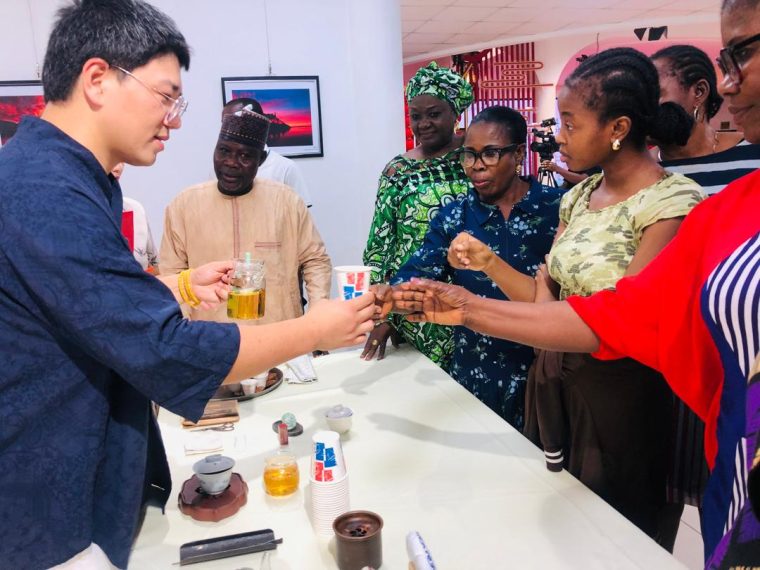
The event, titled “Maritime Silk Road Impressions: Immersive Salon of Intangible Cultural Heritage from Ancient Zayton Port,” was held at the China Cultural Centre and drew diplomats, government officials, cultural practitioners, and enthusiasts from both nations.
In his address, Zhou Hongyou, Minister at the Chinese Embassy in Nigeria, remarked that tea has remained a significant cultural emblem that fosters friendship and dialogue among individuals from various regions of the globe.
He elaborated that the traditions surrounding Chinese tea, which have a history spanning thousands of years, transcended Asia via the ancient Silk Road and gradually evolved into a medium for cultural interaction and exchange among civilizations.
Zhou highlighted that China’s traditional tea-making techniques gained international acclaim when they were inscribed on UNESCO’s list of intangible cultural heritage in 2022.
He indicated that the Abuja cultural salon was organized to honor the lasting legacy of the Maritime Silk Road, which historically linked different continents through trade, culture, and human interaction.
The diplomat also mentioned the historic Chinese city of Quanzhou, known in ancient times as Zayton, characterizing it as one of the principal hubs of maritime trade and cultural exchange during the peak of the Silk Road period.
He asserted that in addition to the trade of goods such as silk, porcelain, and spices, the Silk Road also promoted values of cooperation, inclusivity, peaceful coexistence, and mutual learning among nations.
Zhou further stated that these principles continue to influence contemporary relations between Nigeria and China, especially through bilateral cooperation under the Belt and Road Initiative.
Additionally, Abdulkarim Ozi Ibrahim, Permanent Secretary of the Federal Ministry of Art, Culture, Tourism and Creative Economy, praised the organizers for utilizing cultural heritage as a means to foster understanding and collaboration.